Breeders are kindly asked to update me at least once a month so I know whether their puppy advert should remain active.
All photographs, montages and promotional graphics must use genuine images of the actual puppy or litter being advertised. AI-generated or AI-enhanced images will not be accepted.
All photographs and artwork are supplied by the individual breeder. Prospective owners are strongly advised to visit in person and meet both the puppy and its mother before making any commitment.
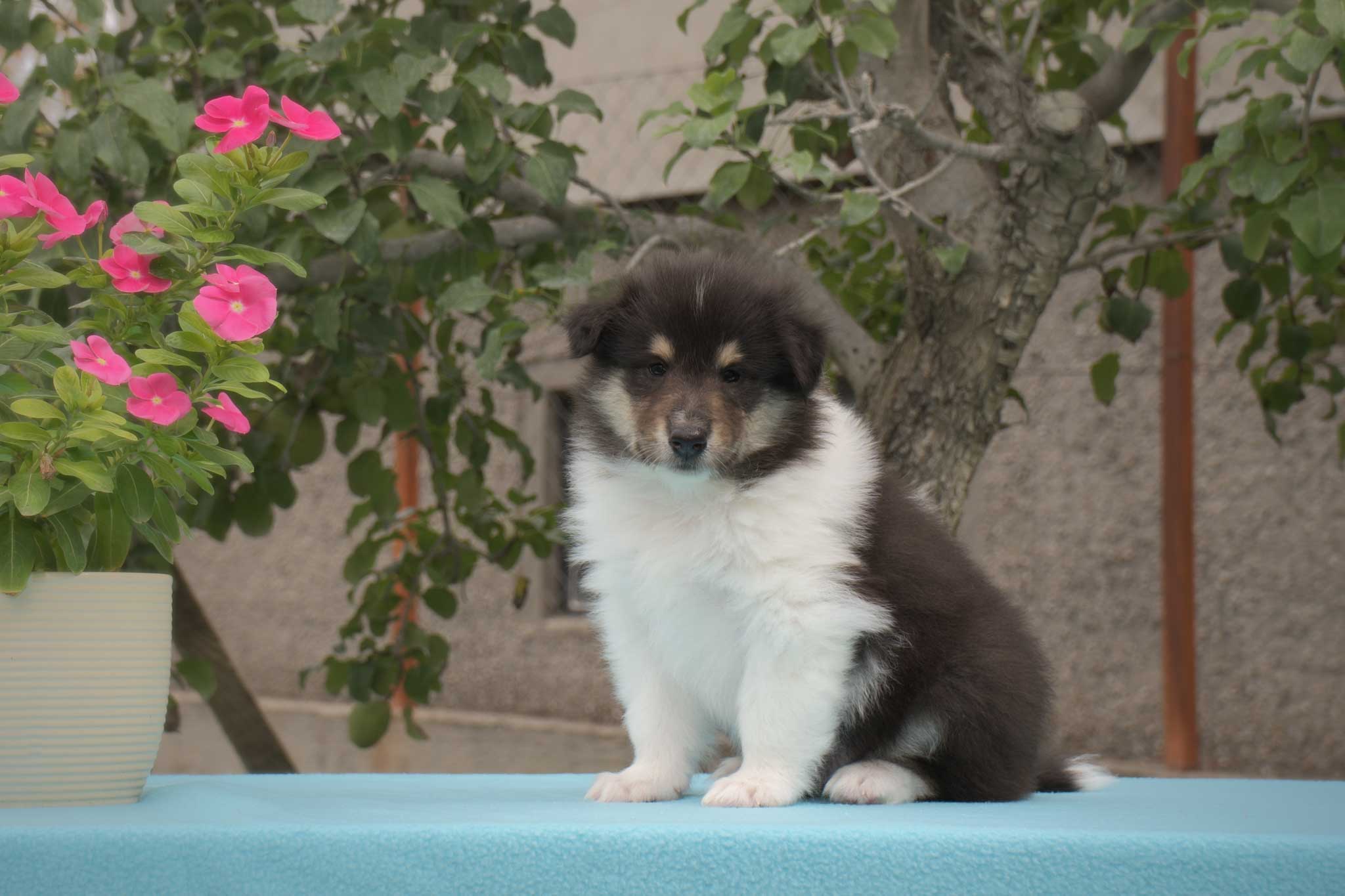
Puppies will be clinically eye tested, microchipped, fully DNA health tested with Laboklin, Royal Kennel Club registered, wormed, received first vaccinations and come home with puppy packs, guides and paperwork. They will also be fully endorsed (please read more about endorsements HERE . Support for lifetime given by both breeder and stud owner.
Puppies have been socialised from day one and taken out and about in a pup mobil.
Puppies have been microchipped, extensively health tested, vet checked, wormed. Will receive first vaccinations.
They live with other dogs and cats, adults and children in the family home and we have a small holding so puppies are also used to horses, sheep, chickens, goats, pigs etc. Puppies are all very confident with loving personalities. We are keeping a male ourselves from this fantastic litter that I am incredibly proud of.
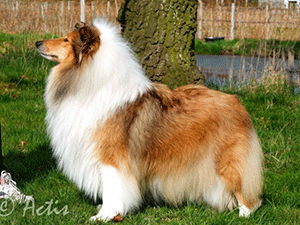
Junior ChPL, ChPL, ChRO, European Junior Winner 22’
France (BOS), Junior Winner SK DESTINY OF LOVE Actis PL
(Multi Ch. OBELIX Actis PL + Ch Tiganlea THIS MUST BE LOVE)
Parents and grandparents hips scored and HD-clear
(excellent hips).
We have some beautiful, very promising puppies available,
both male and female. These puppies have been carefully bred
with excellent temperament and quality in mind, making them
ideal companions or future show prospects.
They are DM clear by parentage, giving you peace of mind
about their health background.
Genetic health tests look at whether a dog carries certain
inherited conditions.
In the past, laboratories used symbols like +/+ to show a
dog was clear. Today, most labs use N/N, which means the
same thing: the dog does not carry the tested mutation.
+/- means Carrier and -/- means Affected.
The Royal Kennel Club makes this easier to understand by
using three simple terms:
Clear – The dog does not carry the
tested mutation and cannot pass it on to its puppies.
Carrier – The dog carries one copy of
the mutation but is usually healthy. They can pass the
mutation on to their puppies.
Affected – The dog has two copies of
the mutation.
I have also used the same terminology as the RKC to record
health test results on the pedigree database on this
website.
It is important to clarify that a genetically “affected”
result means the dog possesses two copies of the
disease-associated variant. This indicates a genetic
predisposition to the condition. However, depending on the
specific disorder, inheritance pattern and factors such as
penetrance and expressivity, a genetically affected dog may
not always show clinical signs of disease.
If you are unsure what a result means, a responsible breeder
or your vet should be happy to explain it clearly to you.
When you finally welcome your new puppy into your life,
please keep this image in mind. Their bones are not even
touching yet.
They walk so beautifully with big, flexible legs and
backward movements because their joints are made up almost
entirely of cartilage, muscles, tendons and ligaments
covered in skin.
When you over-exercise them or do not limit their activity,
you are not giving them a chance to grow properly. Every
large jump or race causes pressure between the developing
bones.
Reasonable activity is normal, but repeatedly allowing a
puppy to jump from furniture, undertake long walks or run
on slippery floors can place unnecessary stress on the
developing joints.
You only get one opportunity to help them grow. A
well-constructed adult body depends on good breeding and
appropriate rearing. Once grown, they will have the rest of
their life to enjoy more demanding exercise.
Disclaimer
Collielife will not be held accountable for any information
quoted in adverts, or health problems with puppies or adults
purchased from breeders who advertise on this website.
BUYERS
When buying a puppy, please ensure the breeder will take the
puppy or dog back at any time during its lifetime should
your circumstances change.
It is the buyer's responsibility to check the vet health
check confirmation, eye examination and any other health
testing documentation mentioned in the advert.
See the Royal Kennel Club website for more advice
HERE .
NOTE
The term “vet health check” means the breeder has taken the
litter to a vet for a general examination before they go to
their new homes.
The vet may weigh the puppy and check the heart, teeth and
general condition. This gives an impression of the puppy's
health on that particular day. It is not the same as
genetic health testing.
You can find more information on recommended health tests
on the
RKC website .
If the sire or dam of a litter is DM Clear, puppies from
the litter will not be classed as high risk to develop the
disease.
Read more about DM here.
The Royal Kennel Club Health Team, in conjunction with the Rough Collie Breed Council, considers hip and eye screening essential for responsible breeding through the following schemes, or their equivalents:
Hip Dysplasia Scheme (BVA/KC)
Eye Screening Scheme (BVA/KC/ISDS)
The following DNA tests are also recommended:
CEA/CH
PRA-rcd2
Degenerative Myelopathy (DM)
MDR1
Dermatomyositis (DMS)
This website strongly recommends that all dogs are tested
prior to breeding for
Degenerative Myelopathy .
DM affected dogs do not automatically have to be excluded
from breeding, but testing enables breeders to choose their
breeding partners wisely. For a litter to be born “risk
free”, at least one parent should be clear of the DM gene.
You can search the
pedigree database
for results, but please note that not all breeders choose to
make their results public.
If you would like your own dog or puppy DNA tested, we
recommend
Laboklin .
More information on health testing is available
HERE .
HOW MUCH FOR A PUPPY?
To the person who writes an email simply asking the price,
or calls and, after hearing the price, says, “I can buy a
cheaper puppy elsewhere”. I also address the person who says
they do not care about papers because they want “just a
pet”.
No dog is “just a pet”. Behind every purebred puppy or dog
is a breeder. Registration papers are records of lineage
that document bloodlines and allow possible health issues
within the pedigree to be researched.
When you choose to buy from a responsible breeder, that
breeder accepts responsibility for the health and welfare
of every puppy they produce.
A dedicated breeder may miss holidays and sleep, and much of
their home may be devoted to their dogs. They put their
heart and soul into their puppies and remain available to
the owners throughout the dog's life.
Breeders undertake health tests, scans, X-rays, emergency
C-sections, registrations, pedigree research, worming,
microchipping and specialist assessments. They also provide
additional care for any puppy that needs extra help.
A responsible breeder carefully chooses the families who
will own their puppies. Breeding is not a responsibility to
be taken lightly; it is a way of life for those prepared to
make the necessary sacrifices.
A dog is never “just a pet”. It is the breeder's legacy, a
child's best friend, a companion, a protector and a valued
member of the family.