
Pituitary Dwarfism in Dogs
Pituitary dwarfism, also known as juvenile-onset hypopituitarism or combined pituitary hormone deficiency, is an uncommon condition in which the pituitary gland does not produce adequate amounts of one or more hormones.
The most obvious result is proportionate growth failure. However, the pituitary gland helps control several other body systems, so an affected dog may develop coat, skin, thyroid, reproductive, kidney, skeletal and neurological problems.
The Pituitary Gland
The pituitary is a small endocrine gland situated at the base of the brain. It works closely with the hypothalamus and produces or releases hormones that influence growth, thyroid function, reproduction, stress responses and water balance.
Important pituitary hormones include:
- Growth hormone (GH): promotes normal growth and influences metabolism through insulin-like growth factor 1 (IGF-1).
- Thyroid-stimulating hormone (TSH): stimulates the thyroid gland.
- Follicle-stimulating hormone (FSH) and luteinising hormone (LH): contribute to normal reproductive function.
- Prolactin: has an important role in mammary development and lactation.
- Adrenocorticotropic hormone (ACTH): stimulates the adrenal cortex.
- Antidiuretic hormone (ADH): is made in the hypothalamus and released through the posterior pituitary to help regulate water balance.
- Oxytocin: is made in the hypothalamus and released through the posterior pituitary, with roles in labour and milk release.
The hormones affected vary according to the underlying cause. In the inherited form associated with certain LHX3 variants, several anterior pituitary hormones may be deficient, although ACTH secretion may be preserved.
Inheritance
A well-documented inherited form of pituitary dwarfism follows an autosomal recessive pattern. A carrier usually appears completely normal because it has one working copy and one altered copy of the relevant gene.
When two carriers of the same recessive variant are mated, each puppy has:
- A 25% chance of inheriting two normal copies.
- A 50% chance of being an unaffected carrier.
- A 25% chance of inheriting two altered copies and being affected.
These probabilities apply independently to every puppy. They do not mean that every litter of four will contain exactly one affected puppy.
Signs in Puppies
Affected puppies may appear normal at birth. A difference in growth often becomes apparent during the first few months, when the puppy remains considerably smaller than its littermates.
Possible signs include:
- Proportionate but markedly reduced growth.
- Delayed loss of the soft puppy coat.
- Poor development of the adult coat.
- Hair loss affecting much of the body while the head and lower legs remain haired.
- Thin, scaly or darkened skin.
- Recurring bacterial skin infections.
- Delayed tooth development.
- Quietness, lethargy or reduced mental alertness.
- Abnormal reproductive development or infertility.
- Undescended testicles in some affected males.
The appearance and severity can vary. Not every small puppy or puppy with a poor coat has pituitary dwarfism, so veterinary investigation is essential.


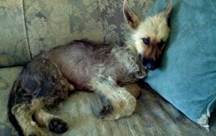
Other Health Problems
The consequences of pituitary dwarfism are not limited to small stature and coat loss. Some affected dogs develop deficiencies in several hormones, and the severity varies between individuals.
Associated problems may include:
- Secondary hypothyroidism: insufficient TSH may result in reduced thyroid hormone production, contributing to lethargy, skin and coat changes, and altered metabolism.
- Reproductive abnormalities: affected males may have poor testicular development, undescended testicles and infertility. Females may have irregular seasons or fail to ovulate normally.
- Kidney problems: some affected dogs develop impaired kidney function, which may influence their long-term health.
- Skin disease: hair loss, darkened or scaly skin and recurring bacterial infections can occur.
- Skeletal or neurological abnormalities: malformation or instability affecting the first and second cervical vertebrae has been documented in some dogs with an LHX3-associated condition.
Diagnosis
Diagnosis cannot be confirmed from appearance alone. Other causes of poor growth, delayed development or coat loss must be considered.
Veterinary investigation may include:
- A full clinical examination and detailed history.
- Comparison of growth and weight with healthy littermates.
- Routine blood and urine tests.
- Measurement of thyroid hormones.
- Measurement of insulin-like growth factor 1 (IGF-1).
- Specialist pituitary hormone stimulation tests where available.
- Diagnostic imaging if pituitary or spinal abnormalities are suspected.
- A relevant, breed-appropriate DNA test.
Low IGF-1 can support a diagnosis of growth-hormone deficiency, but results must be interpreted alongside the dog’s age, size, clinical signs and other test results. Young puppies and some small dogs may naturally have lower values.
A positive DNA result can confirm that a dog has inherited the particular variant being tested. A clear result only means the dog does not have that specific tested variant; it cannot rule out every other genetic, hormonal or developmental cause of dwarfism.
Treatment
Pituitary dwarfism cannot presently be cured, but carefully managed treatment may improve coat growth, activity, development and quality of life.
Treatment may include:
- Growth-hormone treatment: canine growth hormone is not routinely available. Porcine growth hormone has been used under specialist supervision because of its similarity to canine growth hormone.
- Progestogen treatment: medicines such as medroxyprogesterone acetate or proligestone have sometimes been used to stimulate mammary production of growth hormone.
- Thyroid hormone replacement: this may be required when secondary hypothyroidism is confirmed.
- Treatment of associated disease: skin infections, kidney problems and other complications need appropriate management.
Treatment should be tailored to the individual dog. Regular examinations, blood tests and urine tests may be needed to assess hormone levels, blood glucose, kidney function and any adverse effects.
Prognosis
The outlook varies considerably. Untreated dogs may have a reduced quality of life and shortened lifespan, particularly when several hormones are deficient or kidney, spinal or neurological disease develops.
Some affected dogs survive considerably longer than early reports suggested, especially when complications are identified and managed. Treatment may improve quality of life but does not remove the underlying genetic condition or guarantee a normal lifespan.

Hobbit, aged two years: The original account stated that treatment with proligestone from four months of age produced a significant improvement in Hobbit’s coat and appearance, although internal health problems remained. This is an individual case and should not be treated as a general treatment recommendation.
DNA Testing and Breeding
DNA testing can identify clear dogs, clinically unaffected carriers and dogs with two copies of the tested variant. It is an important tool when a validated test is available for the breed and condition concerned.
A carrier does not usually develop the inherited condition and does not necessarily have to be removed from a breeding programme. Removing every carrier immediately can reduce genetic diversity and may increase the frequency of other inherited problems.
A carrier may be mated to a DNA-clear dog where this is permitted by the relevant health programme. The resulting puppies should be tested before any are used for breeding. Carrier-to-carrier and carrier-to-affected matings should be avoided.
Pituitary dwarfism DNA testing is now available through several established laboratories. Requirements vary and may include a cheek swab or blood sample, so owners and breeders should follow the chosen laboratory’s current instructions rather than using the old postal details previously shown on this page.
Current testing information is available from LABOKLIN UK .
The Royal Kennel Club also lists recognised DNA tests for participating breeds. Its current information about the DP-LHX3 test can be found here .
Reporting an Affected Dog
Owners who suspect pituitary dwarfism should first consult their veterinary surgeon. Referral to a veterinary endocrinologist or specialist centre may be recommended for diagnostic testing and treatment.
The breeder should also be informed so that they can review related dogs and future breeding plans. Where a recognised breed health coordinator or health programme exists, confirmed results may be reported according to that programme’s current procedure.
Medical records and DNA results should be shared accurately. A visually small puppy should not be reported as genetically affected unless the diagnosis has been properly investigated.
Original article contributed by Steve Webb and updated to reflect current information.